Where chemistry loses students, and how we fix it
Nearly every chemistry rescue we run starts with one of these five.
 01
01
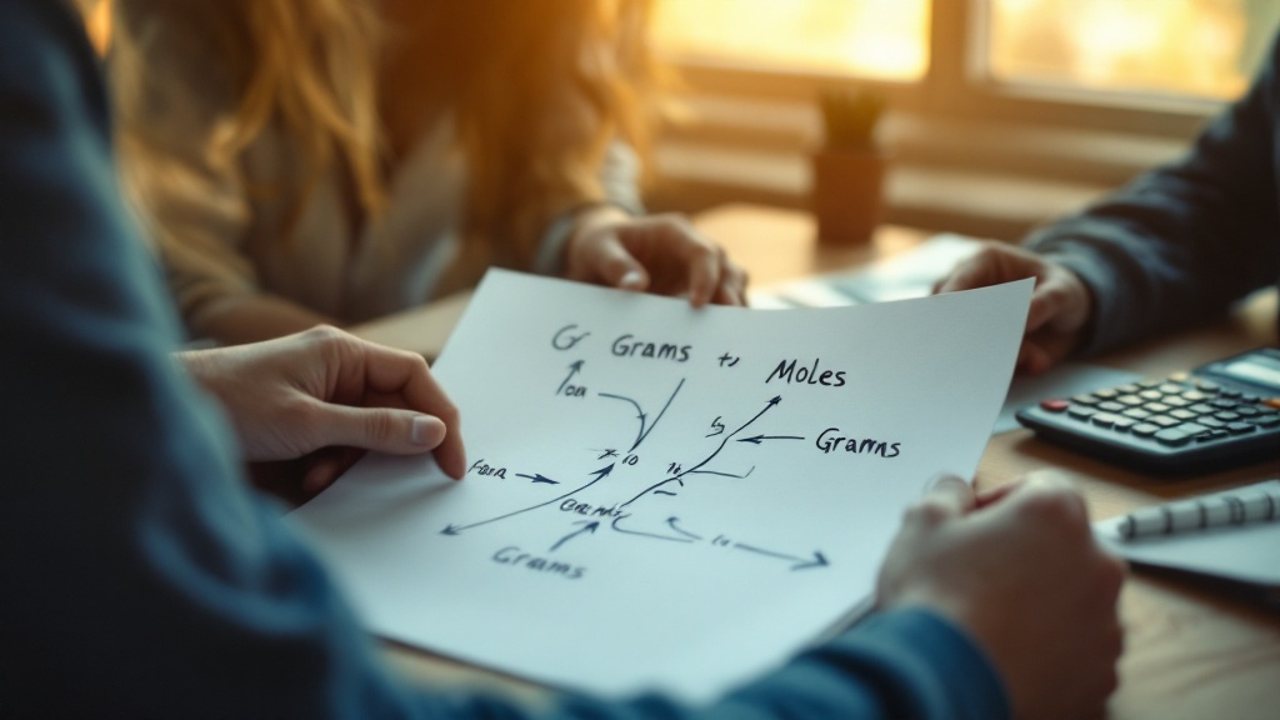
The mole: chemistry's make-or-break concept
What it looks like: Somewhere around October, moles arrive and grades drop. Students shuffle grams, moles, and particles with conversion factors they do not understand, and every stoichiometry problem afterward inherits the confusion.
How our tutors help: Our tutors rebuild the mole as a counting idea, a dozen for atoms, before any conversion factors. Then dimensional analysis gets taught as one repeatable routine. Fix the mole in two or three sessions and the rest of the year opens up.
 02
02
Balancing equations and predicting products
What it looks like: Balancing feels like whack-a-mole, and predicting products feels like pure memorization. Reaction types blur together by the unit test.
How our tutors help: We teach balancing as conservation with a system, inventory, adjust, verify, and reaction types as a small set of recognizable patterns. Students practice sorting reactions before finishing them, which is the skill tests actually reward.
 03
03
Stoichiometry under test pressure
What it looks like: Multi-step problems, grams to moles to moles to grams, with a limiting reagent twist, collapse on tests even when the pieces each make sense alone.
How our tutors help: Tutors train a written roadmap habit: plan the conversion path before computing, label every quantity, box the target. Limiting-reagent problems get a who-runs-out-first story that makes the procedure meaningful instead of memorized.
 04
04
Gas laws, units, and the algebra tax
What it looks like: PV equals nRT turns into an error factory: temperatures left in Celsius, pressure units mismatched to the R constant, algebra slips under time pressure.
How our tutors help: We drill a pre-solve checklist, Kelvin, matching units, solve symbolically first, until it is automatic. Most gas-law points are lost to housekeeping, and housekeeping is teachable.
 05
05
AP Chemistry: labs, particulate models, and justification
What it looks like: AP Chem demands explanations at the particle level and claim-evidence reasoning on lab-based FRQs. Students who memorized their way through honors hit a wall.
How our tutors help: Our tutors, experienced science teachers, coach the explanation genre itself: draw the particulate picture, connect it to the data, write the justification the rubric wants. Released FRQs with rubric review anchor the spring.